
Spolu s o.z. SOLIM vydáva Katedra hospodárksej politiky EAPG Working Paper Series. EAPG - Economic Analysis and Policy Group - sú neformálne stretnutia učiteľov, mladých výskumných pracovníkov, študentov a ľudí z praxe, na ktorých sa diskutujú rôzne témy zo spoločenského života, ako aj výskumné práce z rôznych vedeckých oblastí. Okrem stretnutí sme sa pred pár rokmi rozhodli vydávať spolu príspevky, v ktorých by boli prezentované výsledky vlastného výskumu učiteľov a PhD. študentov. Okrem toho majú v rámci EAPG Working Paper Series možnosť publikovať výsledky výskumu vynikajúci študenti inžinierskeho štúdia.
Názov série je: EAPG Working Paper Series
Periodicita: nepravidelne
ISSN 1338-2632
Doteraz publikované dokumenty zoradené od tých najnovších nájdete nižšie:
Číslo 12
Some notes on international transport margins in a balanced World Input-Output Tables
Lábaj, M.
Číslo 11
Optimálne pokuty za kartelové dohody: prípad Slovenska
Kališ, R. - Lábaj, M. - Zemanovičová, D.
Číslo 10
Efektívnosť regulácie v podmienkach slovenského plynárenstva
Silanič, P. - Šiškovičová, A.
Číslo 9
Technologické toky v ekonomicke Slovenska
Kubala, J.
Číslo 8
Hodnotenie eko-efektívnosti pomocou DEA modelov - dvojkroková metóda
Silanič, P.
Číslo 7
Ex-post skúmanie poklesov zametnanosti: Prípad Slovenskej a Českej republiky
Dujava, D.
Číslo 6
Štruktúrna dekompozícia emisií CO2 v Slovenskej republike
Habrman, M.
Číslo 5
Porovnanie ekonomické vývoja v SR s Rakúskom
Svoreňová, M. - Lábaj, M.
Číslo 4
Analýza zdrojov rastu a úrovne TFP v krajinách V4 a vo Fínsku
Kúšik, R. - Lábaj, M.
Číslo 3
Analýza vzťahu ekonomického rastu a nezamestnanosti
Slušná, Ľ.
Číslo 2
Postavenie dolára v medzinárodnom finančnom systéme - vybrané aspekty
Vojtková, M.
Číslo 1
Nekoklasický a keynesovský pohľad na rast ekonomiky
Dujava, D.
- Hits: 64731
Crespo-Cuaresma Jesús, univ. prof. Dr., Vienna University of Economics and Business
Weiss Christoph R., univ. prof. Dr., Vienna University of Economics and Business
Biliana Yontcheva, PhD., Vienna University of Economics and Business
Halická Margaréta, doc. RNDr., CSc., Univerzita Komenského v Bratislave
Zdeněk Tomeš, prof. Ing., Ph.D., Masarykova univerzita v Brne
Martin Kvizda,Doc. Ing., Ph.D., Masarykova univerzita v Brne
Kliková Christiana, prof. Ing., CSc., TU Ostrava
Habrman Michal, Ing., PhD., Inštitút finančnej politiky - MF SR
Kubala Jozef, Ing., PhD., Inštitút finančnej politiky – MF SR
Baláž Vladimír, doc. Ing., PhD. DrSc., CSPV, Prognostický ústav SAV
Sabo Štefan, Ing., PhD., Centrum spoloč. a psychologických vied SAV
Workie Menbere Tiruneh, prof. Dr. Ing., PhD., Ekonomický ústav SAV
Silanič Peter, Ing., Mgr., PhD., Súkromný sektor
Šuster, Martin, Mgr., PhD., Národná Banka Slovenska
- Hits: 70615
- Hits: 55971
We are a group of pedagogues and researchers who are curious about current economic, social, and societal issues and challenges.
- The well-being of our society plays a significant role in our research activities. We try to share our passion about economics with our students.
- Cutting-edge results and methods of the national as well as the international are implemented in our teaching.
- We provide our students with subjects which broaden and deepen their economic knowledge, improve their empirical, statistical, and data processing skills. This furnishes them with a comparative advantage, which enables them to find a job in the labor market.
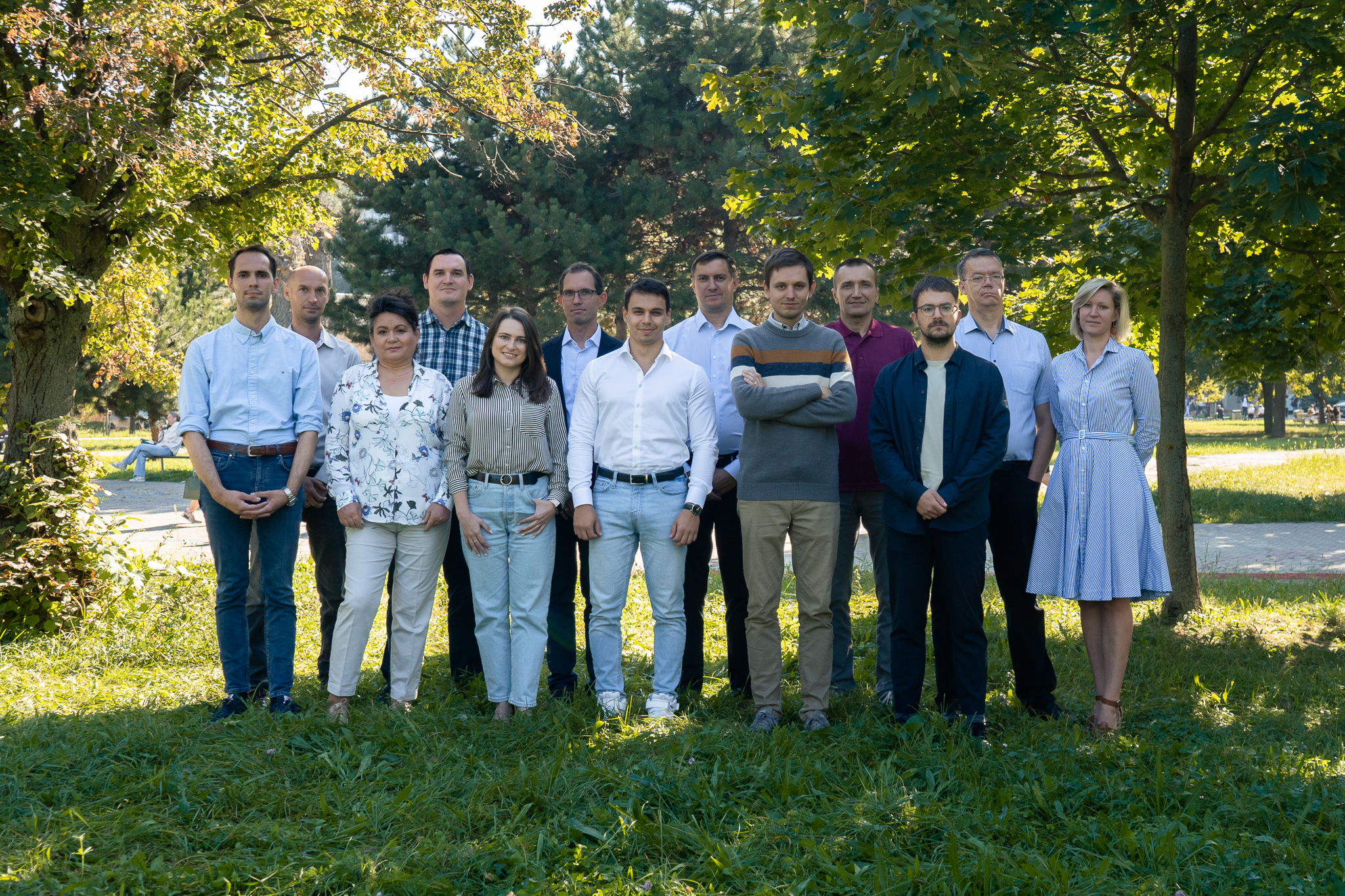
Where you can find us: 4th floor, block B (old building)
Phone: +421 2 6729 1440
Management of the Department

LÁBAJ, Martin, Assoc. Prof. Dipl. Ing., PhD.
Head of the Department
Associate Professor
4B.21 +421 2 6729 1440Short bio:
Martin Lábaj is Professor and Head of the Department of Economic Policy at the Faculty of Economics and Finance. His research areas are development economics, economic policy, structural change, industrial organization and labor market implications of new technologies. He teaches primarily Development Economics for Bachelor students, Applied Econometrics: Policy Evaluation for Master students, and Advanced Topics in Econometrics for PhD students. In the last 10 years, he has co-authored more than a dozen articles published in refereed journals. He has published in journals such as the Cambridge Journal of Economics, Economics Letters, Economic Systems, Applied Economics, European Journal of Health Economics, Empirica, and Journal of the Economics of Ageing. He was the Principal Investigator of the MIT Slovakia Seed Fund project Labor Market Implications of Automation in the United States and the EU (co-led by Daron Acemoglu), which established a new research collaboration between the MIT faculty and the Department of Economic Policy in this area of research.
Short bio:
Martin Lábaj is Professor and Head of the Department of Economic Policy at the Faculty of Economics and Finance. His research areas are development economics, economic policy, structural change, industrial organization and labor market implications of new technologies. He teaches primarily Development Economics for Bachelor students, Applied Econometrics: Policy Evaluation for Master students, and Advanced Topics in Econometrics for PhD students. In the last 10 years, he has co-authored more than a dozen articles published in refereed journals. He has published in journals such as the Cambridge Journal of Economics, Economics Letters, Economic Systems, Applied Economics, European Journal of Health Economics, Empirica, and Journal of the Economics of Ageing. He was the Principal Investigator of the MIT Slovakia Seed Fund project Labor Market Implications of Automation in the United States and the EU (co-led by Daron Acemoglu), which established a new research collaboration between the MIT faculty and the Department of Economic Policy in this area of research.

KALIŠ, Richard, Dipl. Ing., PhD.
Secretary of the Department
Assistant Professor
4B.12 +421 2 6729 1412
- Hits: 104088
Najnovšie metódy pre rozhodnutia a politiky založené na údajoch - jasne a zrozumiteľne
Osvojíte si vedomosti o moderných metódach výskumného dizajnu pre odhad kauzálnych efektov opatrení, programov a politík.
Získate pokročilé zručnosti pre používanie moderných softvérov (napr. Stata) v empirickom ekonomickom výskume, naučíte sa skripty, programovať pokročilejšie analýzy.
Naučíte sa formulovať ekonomický problém a navrhnúť výskumný dizajn pre jeho preskúmanie prostredníctvom empirickej analýzy, formulovať hypotézy a analyticky ich potvrdiť alebo vyvrátiť.
Vyučujúci:
Martin Lábaj, Erika Majzlíková
Predpoklady: aspoň jeden semester ekonometrie
Zaradenie v študijných programoch: povinný predmet št. programu Aplikovaná ekonómia (2.st), výberový predmet št. programu Ekonómia (3.st)
Stručná osnova:
- Základné pojmy, napr. kauzalita, skreslenie, ceteris paribus.
- Výskumný dizajn, indentifikačné stratégie, estimátor.
- Znáhodnené kontrolované experimenty.
- Regresia s viacerými kontrolnými premennými.
- Skreslenie spôsobené vynechaním premennej.
- Inštrumentálne premenné.
- IV estimátor a dvojstupňová metóda najmenších štvorcov.
- Regresia diskontinuitných zmien.
- Diff-in-Diff estimátor.
- Odhady na spojených prierezových údajoch a panelových údajoch pre hodnotenie efektov politík.
- Metóda syntetických kontrolných skupín.
- Neštandardné štandardné chyby
Odporúčaná literatúra:
Cunningham, S., 2021. Causal inference: The mixtape. Yale University Press.
Angrist, J.D. and Pischke, J.S., 2014. Mastering'metrics: The path from cause to effect. Princeton University Press.
Wooldridge, J.M., 2016. Introductory econometrics: A modern approach. Nelson Education.
Angrist, J.D. and Pischke, J.S., 2008. Mostly harmless econometrics: An empiricist's companion. Princeton university press.
- Hits: 2644
- Hits: 8681

Abstract
Does artificial intelligence automate work or augment workers' productive capabilities? Our results show that it can do both, through distinct channels that conventional exposure measures obscure. We distinguish these channels by linking U.S. patents to occupations' tasks and tools, with patent–task matches capturing automation and patent–tool matches capturing augmentation. Using the origins and diffusion of historical AI breakthroughs to predict contemporary local exposure, we find large but opposing labor-market effects. A one-standard-deviation increase in AI automation reduces occupational employment by 21 percent, with little effect on wages; AI augmentation instead raises wages by 8 percent, alongside some employment growth. We also find that a larger AI share within each channel strengthens labor displacement through automation while shifting augmentation's effects from employment growth toward wage gains. The labor-market consequences of AI therefore depend critically on the balance between automation and augmentation rather than overall exposure alone.
- Hits: 8

Abstract
We study the role of industrial robots in shaping the divergence between labor productivity and wages across European countries from 1995 to 2020. To this end, we develop a tractable theoretical model in which robots substitute for routine labor. The model predicts a widening wage-productivity gap with increasing robot adoption. Using harmonized country-sector-year data, we find a robust positive association between robot intensity and the wage–productivity gap, particularly in the manufacturing sector. The relationship remains stable when controlling for outsourcing and capital intensity. Instrumental variable estimates based on external robot trends from the United States, South Korea, and New Zealand support a causal link between robot adoption and the wage–productivity wedge.
- Hits: 279

Abstract
We estimate the economic consequences of electricity blackout scenarios on the automotive industry and the Slovak economy. Our estimates of inoperability of the automotive sector range from 2.9 % to 4.2 % across regions on the first day of the blackout, while the overall inoperability of the economy during a three-day blackout would reach up to 10 %. The economy would suffer a loss of final demand ranging from €34.28 million in the most optimistic scenario to €122.49 million in the least optimistic scenario. We note a relative resilience of the automotive sector compared with the vulnerability of the economy. We document substantial regional heterogeneity in the distribution of economic impacts. The model has wide potential for further use by public policy makers as well as stakeholders in economic resilience planning. The main value added of this paper is the high regional resolution of the model at NUTS 3 level, which allows accurate quantification of losses in individual regions, as well as original and flexible framework for temporal modelling of economic impacts based on hourly/daily electricity consumption indices and monthly industrial production indices.
- Hits: 134

Strategic partner

Main Partners



Partners







Projects handled at the Faculty of Economics and Finance
