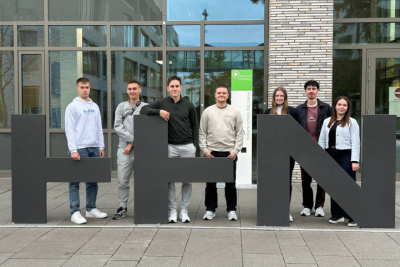
Students from the Faculty of Economics and Finance at EUBA participated in the international Blended Intensive Program (BIP), titled “Business Simulation.” The project was organized in cooperation with the EUBA NHF, Haaga-Helia University of Applied Sciences (Finland), and Hochschule Heilbronn (Germany).
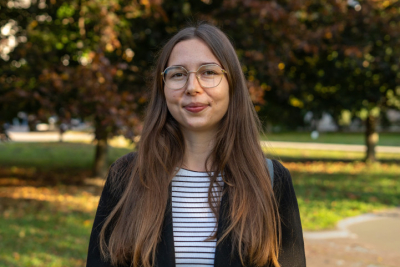
Bc. Paula Gašpercová is a fifth-year student in the Applied Economics program. She is also the winner of the Student Scientific and Professional Activity (ŠVOČ) competition at both the faculty and university levels, and the recipient of the Literary Fund Award for the best paper presented at the Student Scientific Conference in the 2024/25 academic year. Her supervisor was Peter Tóth.
We talked with Paula about her research, motivation to participate in the competition, what makes a ŠVOČ paper successful, and her future career plans.
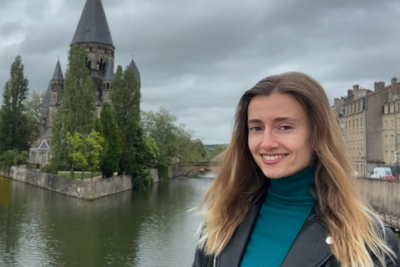
Barbara Čeryová is a recent graduate of the PhD program in Finance at the Faculty of National Economy (NHF). After completing her doctoral studies, she now works as an analyst at the European Investment Fund (EIF), headquartered in Luxembourg. In our interview, we discussed her motivations for pursuing a PhD in Slovakia, the new format of completing the degree through a series of journal articles, and finally, whether women face greater challenges in science.
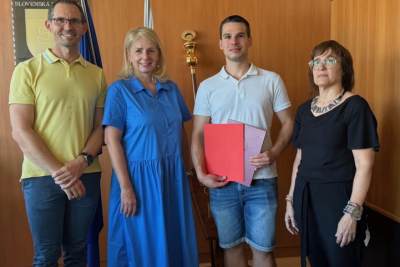
Ing. Patrik Turcsek became the first graduate of the joint study program Applied Economics between the Faculty of National Economy and the University of Coimbra in Portugal. We spoke with him about what it’s like to study at two universities at the same time, what the program brought him, and what advice he has for those considering a similar path.
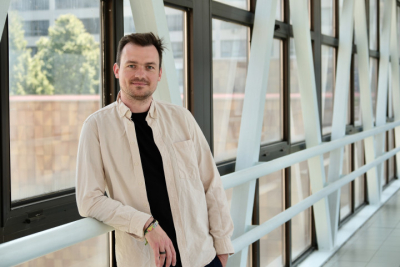
“Why do some nudges work and others not?” — this is the title of the latest scientific article co-authored by researchers from NHF EUBA. Matej Lorko (NHF), Tomáš Miklánek (VŠE Prague), and Maroš Servátka (NHF and Macquarie University Sydney) explore why some nudges are effective while others are not, particularly in the area of tax compliance. The article presents the results of the very first economic experiment conducted in the BEE4R Lab at the faculty. It was published in the Journal of Economic Behavior & Organization. We spoke with Matej Lorko about this achievement.
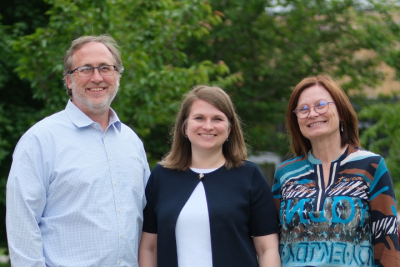
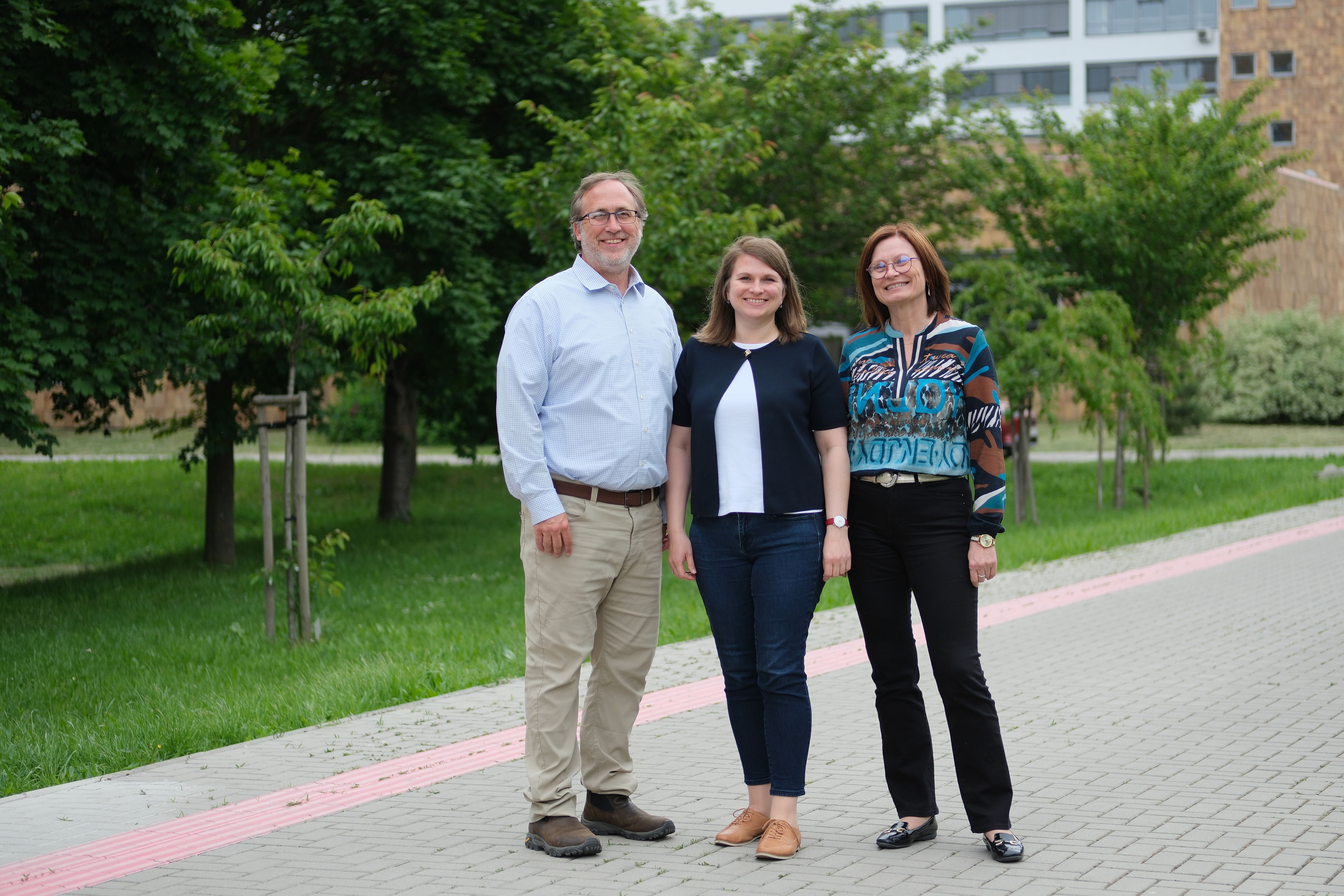
With Zuzka Brokešová, we talked about a new paper she co-authored and published in the prestigious journal Manufacturing and Service Operations Management. Her co-authors include Janka Péliová (Professor at the Department of Finance) and Carry Deck (University of Alabama). In the interview, you will learn why even experienced managers make errors when ordering inventory, what the “pull-to-center effect” is, and how high-quality feedback and intensive learning can significantly improve decision-making. Zuzka also shares what the demanding publication process looked like and why it’s worth persevering in the pursuit of high-quality academic work.
Your latest research focuses on managerial decision-making in inventory management. Tell us more about your work.
Every manager who decides how much product to order faces the same problem—estimating demand, which is always uncertain. In our research, we focused on this so-called newsvendor problem, a classic topic in inventory management. We examined why people—even those with experience—often make systematic errors that lead to suboptimal orders. To understand this, we created a unique experimental setting in which participants made decisions in nearly continuous time and received feedback about actual customer demand every half-second. This intensive environment allowed us to observe how decision quality evolves with growing experience.
In the article, you work with a concept that I’ve taken the liberty to translate as the “pull-to-center effect.” As a layperson, this seemed to me like a key idea in your work. What makes this effect interesting, and why is it important to understand how it arises—or how to think about it?
Imagine you own an ice cream stand and have to decide in the morning how much ice cream to prepare. If you prepare too little, you lose customers; too much, and the rest will spoil. While there’s an “optimal” amount, people tend to intuitively lean toward the average demand—the center. That’s the pull-to-center effect. It may sound harmless, but this mistake can cost companies a lot of money. Interestingly, this effect persists even among those with formal education or managerial experience. Our study shows that only truly extensive and intensive experience with feedback—not just theoretical training or passive observation—can significantly reduce this error.
In a recent conversation with Matej Lorko (link to interview), we talked about experiments in social sciences in general. Your study uses so-called “near-continuous time.” What does that mean, and what are its advantages over traditional experiments?
Traditional experiments in social sciences typically proceed in a step-by-step manner: you make a decision, wait for the outcome, and then proceed. We asked ourselves—what if we sped this up? In our experiment, participants didn’t have to wait—their decision would automatically repeat every half-second until they changed it. This allowed them to “live through” hundreds or even thousands of scenarios within just a few minutes. This approach enabled them to quickly test, learn from mistakes, and improve. And it gave us a unique opportunity to observe how experience translates into better decision-making in real time.
If I could take away one key insight from your paper, what would it be—and why?
Even though decision-making may seem like a matter of intuition or talent, it turns out that experience—but not just any experience—makes a crucial difference. If people are given sufficient space to “try out” the consequences of their decisions in a large number of cases, they learn to make better choices. And this doesn’t just apply to inventory—it likely holds for other types of managerial decision-making as well. In short: with quality feedback and opportunities to experiment, optimal decision-making can be trained.
Zuzka, your article was published in a leading journal in management science. What did the publication process look like—from the first submission to final acceptance—and what did you find the most challenging?
It took more than three years. From the initial submission to final acceptance, we went through five rounds of peer review. Each round brought new challenges: adding new experiments, more analysis, and expanding the discussion. The reviewers were demanding but fair—and each of their suggestions helped push the paper forward. The biggest challenge was maintaining perspective and energy through multiple rounds of rewriting. But it was worth it—the result is a study that made it into a top-tier journal and, I hope, will inspire other researchers.
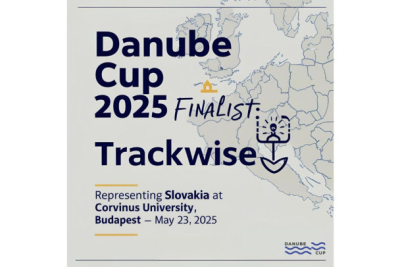
Po úspechu v národnom kole dva slovenské tímy súťažili v medzinárodnom online semifinále súťaže Danube Cup 2025. S radosťou oznamujeme, že do finále postupuje tím TRACKWISE z Ekonomickej univerzity v Bratislave!
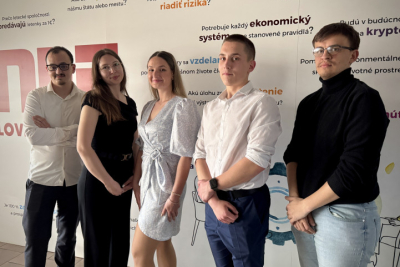
This year’s Faculty Round of the Student Scientific and Professional Activity (ŠVOČ) once again confirmed that our faculty is home to exceptional students with strong research potential. Although several students registered for the competition in the winter semester, only five completed and submitted their work. However, the quality of their output clearly outweighed the quantity—demonstrating that ŠVOČ remains a space for original ideas, analytical work, and socially relevant topics.
Fakultné kolo Študentskej vedeckej odbornej činnosti (ŠVOČ) aj tento rok potvrdilo, že naša fakulta má výnimočných študentov a študentky s výskumným potenciálom. Hoci sa do súťaže v zimnom semestri prihlásilo viacero záujemcov, svoje práce dokončilo a odovzdalo len päť z nich. Ich výsledky však ukázali, že kvalita prevážila kvantitu – a že ŠVOČ na fakulte zostáva priestorom pre originálne nápady, analytickú prácu aj spoločensky dôležité témy.

V stredu 30. apríla 2025 sa uskutoční fakultné kolo ŠVOČ. Prídi si vypočuť obhajoby prác a podporiť svojho favorita!
Je ho možné sledovať od 13:00 hod : link
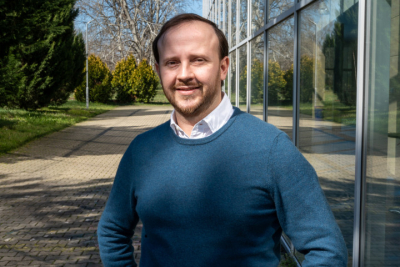
Flavio Malnati is an Italian-born economist currently working as a lecturer at the Faculty of Economics and Finance, affiliated with the Department of Economic Policy. We spoke with Flavio about his experience teaching both Erasmus and Slovak students, his perspective on our faculty and university, and the research projects he is currently working on.
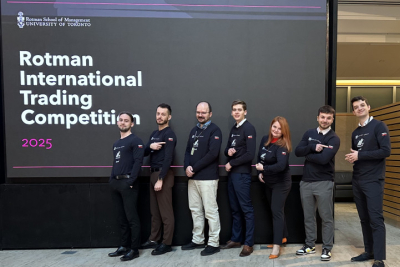
V Toronte sa aj tento rok konala medzinárodná súťaž v obchodovaní, Rotman International Trading Competition. V konkurencii takmer štyroch desiatok tímov z celého sveta sa nestratili ani študenti Národohospodárskej fakulty študijného programu Finančné trhy a investovanie v zložení Bc. Adam Cicák, Bc. Gabriel Husarčík, Bc. Jozef Lajčin a Bc. Martin Vražda, pod odborným vedením doc. Ing. Jany Kotlebovej, PhD., doc. Ing. Petra Árendáša, PhD. a Ing. Marka Dávida Vatehu, PhD.
Strategic partner

Main Partners



Partners






Projects handled at the Faculty of Economics and Finance
